
Your AC and Hurricane Season in Clay County: Before the Storm and After a Flood
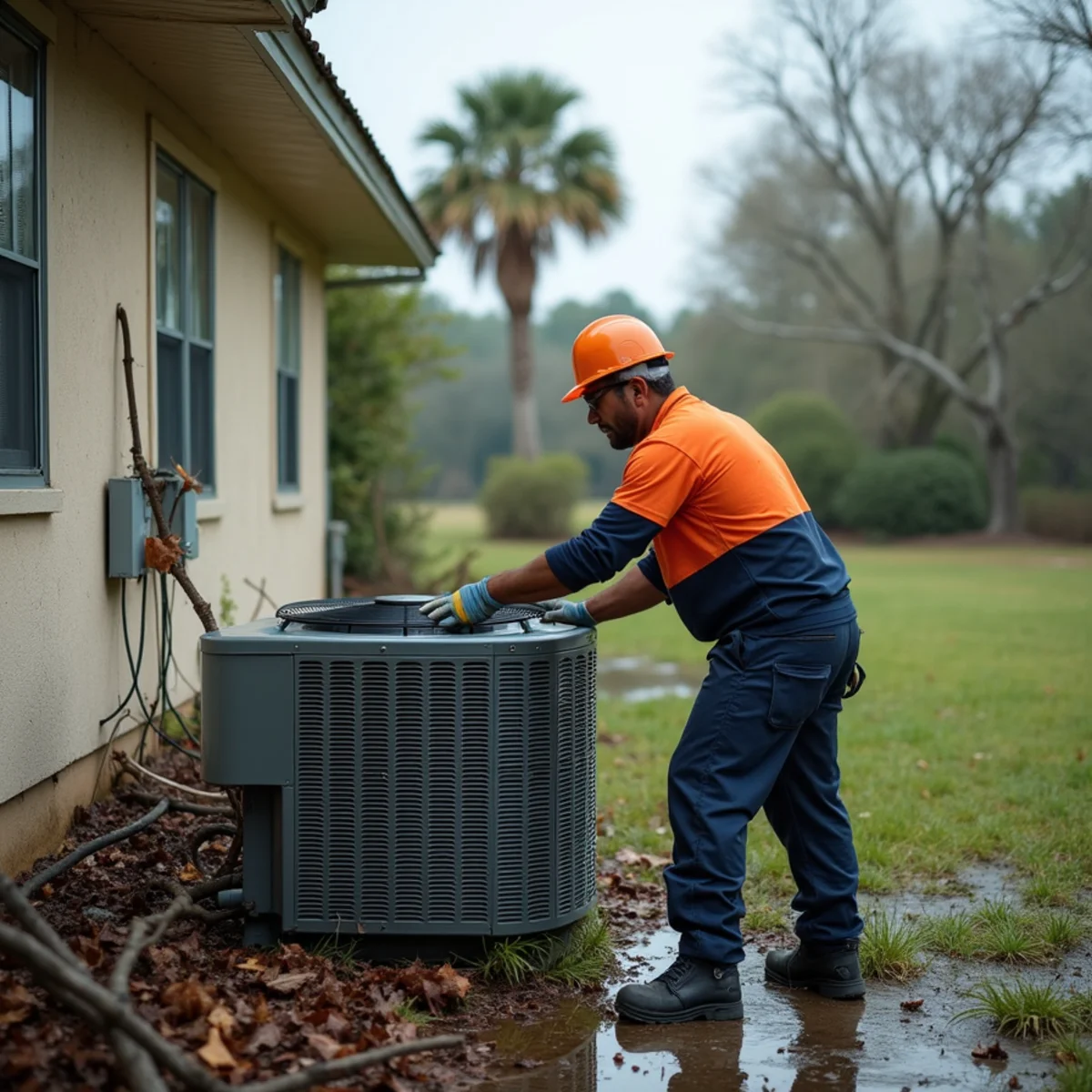
Quick answer: Before a hurricane, turn your AC off at the thermostat and the breaker if flooding or a direct hit is likely, clear loose debris from around the outdoor unit, and consider a surge protector. After the storm, never switch on an outdoor unit that sat in flood water — water in the electrical and compressor is a shock and fire hazard and can destroy the unit. Clear debris from a safe distance, keep flooded or visibly damaged equipment off, and have a technician inspect the electrical, coil and controls before any restart.
Why storms are hard on HVAC here
Clay County knows storm damage. Black Creek in Middleburg topped its old high-water mark by about seven feet in the September 2017 storm, and low ground along the St. Johns River floods in big events. For HVAC, hurricanes bring three distinct threats: flooding that submerges outdoor units, power surges when the grid comes back, and wind-driven debris that packs into or dents the condenser. Each calls for a different response.
Before the storm
- If a direct hit or flooding is likely, turn the system off at the thermostat and the breaker — a system that is off is far less vulnerable to a surge
- Clear loose yard debris, branches and furniture from around the outdoor unit so it cannot become a projectile
- Do not cover the unit tightly while running; if you wrap it, do so only while it is off and uncover it before restarting
- Consider a whole-home or dedicated HVAC surge protector, installed by an electrician or HVAC contractor, before the season
- Photograph your equipment now for insurance records
The one thing never to do after a flood
Do not switch on an outdoor unit that has been underwater. This is the single most important storm rule. Flood water in the electrical components and compressor is a shock and fire hazard, and powering up a waterlogged unit can destroy it outright. A unit that sat in water needs a professional inspection before anyone decides whether it can be salvaged — and often, flood-submerged equipment must be replaced.
Need an HVAC technician now?
We answer live 24/7 and give you a price before any work starts.
After the storm: safe checks
- Stay clear of downed power lines and standing water near electrical equipment
- Clear debris from around the unit from a safe distance — do not reach through the grille
- Look for flood lines, bent fins, dents and displaced panels
- If the unit was flooded or visibly damaged, keep it off and call
- If power flickered and the system now will not start, a surge may have taken out a capacitor, contactor or control board — that is a repair, not a reason to force it on
Surges: the quiet storm damage
Flooding is obvious; surge damage is not. When power is restored after an outage, the spike can fry a capacitor, contactor or circuit board even on a unit that never got wet. If your AC worked before the outage and will not start after, do not keep resetting the breaker — have it diagnosed. This is one of the most common post-storm calls across Middleburg and the rest of Clay County.
A pre-season tune-up and a surge protector are the cheapest insurance against both, and a post-storm inspection is the safe way back to cooling.
Restarting safely once the power is back
When the grid comes back and the unit stayed dry, give it a moment before you lean on it. Let the power stabilize for a few minutes rather than switching everything on at once, set the thermostat a few degrees at a time instead of all the way down, and listen and watch the first cycle for odd noises, tripping or weak airflow. If it starts and cools normally, you are likely fine. If it hums without starting, trips the breaker, or blows warm, shut it off — a surge-damaged capacitor or contactor is a quick repair, but forcing the system only adds to the damage.
Need an HVAC technician now?
We answer live 24/7 and give you a price before any work starts.
The bottom line
Storm prep for your AC comes down to three habits: turn it off ahead of a likely hit, never power up a unit that sat in flood water, and get a dry-but-dead system diagnosed instead of resetting the breaker. Add a surge protector and a pre-season tune-up and you have covered the three ways Clay County storms take out HVAC — flood, surge and debris — before the next one arrives.
It also helps to have a plan before the season rather than during a warning. Know where your outdoor disconnect and breaker are, keep your equipment photos and model numbers somewhere you can reach them, and have a contractor's number saved so a post-storm inspection is one call away. In a bad season the whole region needs service at once, so the homeowners who prepared ahead of time are the ones back to cool air soonest.
Related questions
Need a hand from a real technician?
We serve Orange Park and Clay County 24/7, with a price before any work starts.
(321) 478-0693